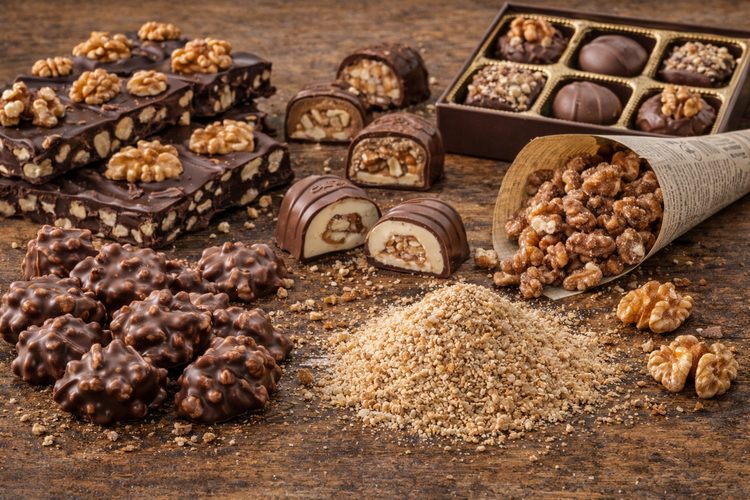
Walnuts are a strong confectionery ingredient because they combine visible identity, natural flavor, fat richness and texture contrast in one inclusion. In commercial practice, though, walnut performance in confectionery depends less on the generic fact that the ingredient is a walnut and more on whether the right color range, particle size, roast style, moisture condition, breakage tolerance and packaging approach were specified before procurement starts. A walnut that works beautifully in a chocolate slab may fail in a praline shell, a nougat system or a sugar-panned application if the cut is wrong, if dust is excessive, if the roast is too dark or if oil migration is not considered early enough.
Atlas uses confectionery topics like this to move a customer from a broad ingredient request to a more useful quote request. Rather than asking only for “walnuts for chocolate” or “walnuts for sweets,” buyers typically get better results when they define what the walnut must do in the finished item: create a visible premium top note, deliver a clean bite inside a bar, disperse into a center, hold its integrity during enrobing, survive mixing without turning to fines, or contribute walnut flavor in a paste or meal system.
Why color, cut and roast style matter so much in confectionery
Confectionery is one of the most appearance-sensitive end uses for walnut ingredients. In bakery or sauces, moderate visual variation can be acceptable. In chocolates, coated items and gifting products, however, color differences are immediately visible. Buyers therefore often evaluate walnuts on three parallel levels:
- Color: the visual brightness or darkness of the kernel or cut piece, which affects premium perception and consistency on exposed surfaces.
- Cut: the size distribution and particle integrity, which drive bite, inclusion count, deposition performance and yield.
- Roast style: the thermal treatment profile, which influences flavor development, brittleness, aroma, residual moisture and compatibility with chocolate, sugar or fat-based systems.
These three variables also interact. A darker roast can deepen color and flavor but increase breakage. A finer cut can distribute well in fillings but expose more surface oil. A visually light kernel may command interest for premium bars, yet become commercially inefficient if the application ultimately chops the walnut into small, hidden inclusions. The practical goal is to align specification value with where the confection actually earns money.
Common confectionery applications for walnut ingredients
Walnuts appear across a wide set of confectionery and adjacent sweet applications. Each use case tends to push buyers toward a different product format and tolerance profile:
- Chocolate bars and tablets: visible halves or large pieces for premium appearance, or medium pieces for more even inclusion spread.
- Clusters and bark: mixed piece sizes can work when rustic appearance is acceptable, but dust control still matters for coating efficiency and pack cleanliness.
- Pralines and centers: smaller diced cuts, granules, meal or paste formats may be preferred for smoother structure and better depositor behavior.
- Nougat, caramel and fudge systems: piece integrity and moisture balance matter because the matrix can pull or soften the inclusion over time.
- Sugar confectionery and panning: roast style, oil surface condition and particle geometry influence adhesion and the ability to build a clean shell.
- Gifting assortments and seasonal items: light visual color, uniformity and premium pack presentation usually matter more than absolute lowest raw material cost.
- Filled wafers, truffles and spread systems: walnut meal, fine granulation, paste or butter-style ingredients may be selected for flavor delivery and dispersion.
Commercial shortcut: when buyers say “confectionery walnuts,” the next question should be whether the walnut is mainly a visible inclusion, a textural inclusion, a flavor ingredient or a process component. That one distinction usually changes the right specification path.
Understanding walnut color in confectionery programs
Color is often over-simplified in initial buying conversations. In reality, confectionery buyers are usually not just asking for “light” walnuts. They are trying to manage brand appearance, premium shelf impression and lot-to-lot consistency. For open-face products, enrobed slabs with visible topping, molded chocolates with exposed inclusions and transparent retail packs, walnut color can affect whether the final item looks fresh, clean and premium.
At quotation stage, color expectations should ideally be translated into a realistic commercial standard. The important question is not only whether the walnuts are light, but also whether the program requires a tighter visual range, reduced contrast between pieces, or better separation from darker kernel fractions. Tighter visual selection can improve presentation, but it may also affect price, usable supply pool and lead-time expectations.
When color is commercially important
- Premium chocolate bars with visible inclusions on the top face
- Gift boxes and assortments where visual presentation supports pricing
- Retail packs with windowed presentation
- Seasonal confectionery where uniform appearance is part of the brand promise
- Products photographed heavily for e-commerce or marketing materials
When color can be relaxed
- Inclusions fully covered by chocolate or compound coating
- Ground, meal or paste applications
- Caramel, nougat or dark chocolate systems where the walnut is not the dominant visual note
- Industrial inclusions where throughput and cost are more important than premium appearance
Buyers can save money by only paying for stricter color control when the end product actually monetizes that appearance. Atlas often frames this as a “where does the consumer see it?” question. If the answer is “everywhere,” color matters more. If the answer is “nowhere after processing,” cut consistency and flavor may deserve more attention than visual brightness.
Choosing the right walnut cut for the finished confection
Walnut cut selection is one of the highest-impact decisions in confectionery sourcing because it determines how the ingredient behaves during mixing, depositing, topping, molding, cutting and eating. In commercial terms, cut choice affects not only sensory experience but also process loss, dust generation, fill uniformity and perceived value.
Typical purchasing conversations may include whole kernels, halves, large pieces, medium pieces, small pieces, diced cuts, granules, meal or flour-style material. The “best” cut depends on what the factory needs from the walnut:
- Halves / large pieces: strongest visual impact, suited to premium decoration and premium bars, but more fragile and generally higher cost per usable kilogram in some applications.
- Medium pieces: common for chocolate bars and clusters where a visible nut identity is needed without oversizing the bite.
- Small pieces / diced cuts: more even distribution, useful in pralines, centers, nougat and inclusions where depositor or cutter performance matters.
- Granules / meal: better for coatings, fillings, flavor systems and reduced-cost particulate inclusion, but less visually distinctive.
- Paste / butter / fine processed ingredients: suitable when the walnut must deliver flavor and richness with minimal particulate presence.
Cut selection by confectionery type
For premium molded tablets, buyers usually prefer a controlled large piece or attractive half/quarter presentation if the walnut is part of the visual signature. For clusters, a slightly broader size distribution may still be acceptable if the appearance target is artisanal rather than highly uniform. For filled chocolates, very large cuts can create shell breakage, filling inconsistency or depositor issues, so smaller, more controlled particulates are often a safer choice. For nougat and caramel systems, the goal is usually a piece that holds identity without creating cutting problems or overly aggressive bite.
Another key variable is fines content. Excess dust or very small broken particles can create several issues in confectionery: visual dullness, inconsistent inclusion counts, smear during enrobing, chocolate thickening, surface mess inside retail packs and yield loss. A serious quote request should therefore discuss not only nominal size but also tolerance around unders and fines.
Raw, pasteurized, dry roasted or oil roasted?
Roast style affects more than flavor. It can change brittleness, aroma release, moisture profile, surface behavior and the way the walnut interacts with chocolate, sugar and fat systems. Buyers should think about roast style as a processing decision tied to the final confection, not just a flavor label.
Raw walnuts
Raw walnuts offer maximum flexibility for manufacturers who want to manage roasting internally. This can be attractive for confectioners that already have roasting capability, want to tune flavor intensity themselves or prefer to match roast point directly to a proprietary chocolate or sugar matrix. The downside is that internal roasting introduces another operational step and requires consistency control inside the buyer’s own plant.
Pasteurized walnuts
Pasteurized kernels may be selected when the buyer needs a treated ingredient but still wants to control downstream roasting or flavor development. The exact commercial relevance depends on the program, regulatory context and plant design. In some cases, pasteurized supply supports food safety planning without fully committing the buyer to a ready-roasted ingredient.
Dry roasted walnuts
Dry roasted walnuts are often preferred where a clean roasted profile is needed without added frying oil. They can simplify operations for confectioners that want a ready-to-use inclusion. Dry roasting often suits chocolate bars, clusters, toppings and visible premium applications where a balanced roasted note is desired. Buyers should still discuss roast depth, breakage tolerance and post-roast handling because over-roasted or overly brittle material may create excess breakage before it reaches the line.
Oil roasted walnuts
Oil roasted walnuts can deliver a richer immediate flavor impression and different sensory character, but they are not always the default choice for confectionery. Additional surface oil can affect coating behavior, seasoning adhesion, pack cleanliness and long-term compatibility with some applications. For certain sweet snack or coated programs, they may be useful. For fine chocolate and premium molded items, many buyers prefer raw-to-roasted control or dry roasted formats instead.
Specification reminder: asking simply for “roasted walnuts” is usually incomplete. Buyers often need to define whether they want raw material for in-house roast, ready-to-use dry roasted product, a target roast intensity, acceptable breakage level after roast, and whether the application is a visible inclusion, internal particulate or processed center ingredient.
Roast intensity and flavor alignment with confectionery systems
The right roast is not the darkest possible roast. It is the roast that fits the sweet system around it. Milk chocolate, dark chocolate, caramel, nougat, compound coating and sugar-panned systems all interact differently with walnut flavor. A light roast can preserve a more natural nut note and cleaner appearance. A deeper roast can amplify warmth and aroma but may push color darker, reduce piece strength and narrow shelf-life comfort if the finished system is sensitive.
Confectioners often think in terms of flavor harmony:
- Milk chocolate: usually benefits from balanced roast development without bitterness or over-dark appearance.
- Dark chocolate: can tolerate or even benefit from stronger roast depth, depending on brand positioning.
- Caramel and toffee: often pair well with developed roast notes, but piece integrity remains important during cutting and packing.
- Praline and spread systems: flavor expression may matter more than visual color, especially when the ingredient is ground or refined.
For commercial supply, the smart approach is to align roast profile with the specific confectionery format, not with a general category description.
Texture management: bite, fragility and oil release
Texture is one of the main reasons walnuts are used in confectionery, yet it is also one of the easiest qualities to lose through poor specification. A walnut inclusion that begins as a premium crunchy piece may arrive on the line with too much breakage, or soften in the finished product if the surrounding matrix migrates moisture or fat. Texture planning should therefore include both ingredient condition and finished product design.
Key practical issues include:
- Breakage during handling: more fragile roasts and larger cuts can degrade during transport, tipping, conveying and mixing.
- Surface oil exposure: finer cuts expose more surface area and can interact more strongly with surrounding chocolate or fillings.
- Moisture exchange: confectionery systems with soft centers or hygroscopic components can gradually change nut bite.
- Cutting performance: in nougat, bars and caramel slabs, oversized or overly hard particulates can complicate clean cutting.
- Consumer bite profile: premium does not always mean largest. The target may be elegant crunch rather than aggressive hardness.
Atlas generally advises buyers to discuss how the walnut moves through the line: is it folded into mass, top-applied, scattered onto chocolate, deposited into cavities, mixed into a center, or refined into a processed ingredient? The answer changes what “good texture” really means.
Processed walnut formats for confectionery
Not every confectionery program needs visible pieces. Many manufacturers use walnuts in processed forms where flavor contribution, richness and cost structure matter more than whole-piece appearance. Depending on the application, useful commercial formats may include:
- Walnut meal: suitable for fillings, bakery-confectionery hybrids, coatings and blended sweet systems.
- Walnut flour or fine granulation: used when even distribution is needed and particle visibility should be minimized.
- Walnut paste or butter-style ingredient: useful for pralines, center systems, creams and flavor bases.
- Walnut oil: sometimes relevant in specialty applications, though it is usually a more focused ingredient discussion.
For processed formats, buyers usually shift from a visual specification to a functional one. Questions become: What particle fineness is needed? Is the paste free-flowing or dense? What is the target application temperature? Does the ingredient need to blend into chocolate, sugar fat systems or dairy-style fillings? Is the goal premium walnut flavor, textural body, label support or cost optimization?
What purchasing teams should define before asking for a quote
Confectionery walnut procurement becomes much more efficient when the quote request is written as a manufacturing brief. Atlas usually recommends that buyers provide the following points:
- End use: chocolate bar, cluster, praline, nougat, caramel, truffle, dragée, topping or filling.
- Walnut format: halves, large pieces, medium pieces, small pieces, diced, meal, flour, paste or other processed form.
- Color expectation: premium visible light appearance, standard commercial appearance, or color non-critical.
- Roast status: raw, pasteurized, ready-to-roast, dry roasted, oil roasted, or roasted to a target sensory profile.
- Cut tolerance: nominal size plus acceptable fines, dust or overs.
- Packaging style: industrial bulk, lined carton, vacuum, foodservice, retail-ready, private label or export-oriented pack.
- Market destination: domestic U.S., Europe, Middle East, Asia or other export program.
- Commercial stage: trial quantity, pilot run, launch volume or repeat container program.
- Needed-by timing: target ship window, promotional season or production start date.
That level of detail helps distinguish between a product development inquiry and a genuine supply program. It also allows realistic discussion around availability, packing, production scheduling and whether the requirement is best served by a more premium visual product or a more efficient manufacturing-grade format.
Commercial planning for domestic and export confectionery buyers
Walnut confectionery programs often develop in stages. A buyer may start with bench trials, then a validation run, then launch volume and finally steady replenishment. Each stage may justify a different packaging and commercial approach. Early-stage programs may prioritize flexibility and sampling speed. Ongoing programs may prioritize lot consistency, packing efficiency, freight planning and documentation alignment.
For export markets, packaging, labeling support and document expectations can influence the final supply structure just as much as the ingredient itself. Buyers should mention whether the walnuts are for industrial reprocessing, foodservice distribution, retail-packing, private label assembly or direct use in finished confectionery manufacture. That single distinction can change pack type, case configuration and document flow assumptions.
Commercial issues that commonly change the quote
- Need for tighter color sorting for premium retail presentation
- Higher integrity cuts with reduced fines
- Roasted versus raw supply and the buyer’s internal roasting capability
- Trial-volume packs versus recurring industrial bulk supply
- Private label or export packaging requirements
- Seasonality tied to gifting calendars, festive launches or promotional windows
Cost control without damaging product performance
Cost pressure is normal in confectionery, especially when cocoa, sugar, dairy or packaging markets are already under strain. The mistake is to reduce walnut cost by choosing a specification that undermines line efficiency or brand presentation. A lower-cost walnut can become expensive if it creates excess breakage, inconsistent inclusion count, visual complaints or poor bite.
Practical cost-control levers usually include:
- Relaxing color requirements when the walnut will not remain visible
- Moving from large decorative cuts to controlled medium cuts if the bite profile still works
- Using meal or fine particulate in fillings where whole-piece identity is unnecessary
- Buying raw material and roasting internally when the plant has the right capability
- Separating trial-stage premium requirements from long-term optimized commercial specs
The best commercial result is usually not the cheapest walnut on paper. It is the walnut specification that delivers the required product performance at a sustainable delivered cost.
How Atlas frames a walnut confectionery quote request
Atlas Global Trading Co. uses application-driven questions to guide walnut programs toward a more quote-ready format. For confectionery, the starting point is usually simple: what does the walnut need to do in the final product? From there, the brief becomes more technical and commercial:
- Is the walnut a hero visual or a background ingredient?
- Does the application need premium light appearance or standard commercial color?
- Is the buyer looking for visible pieces, textural particles or a processed walnut ingredient?
- Will roasting be managed in-house or purchased as a ready-to-use step?
- What pack style and market destination define the logistics plan?
- Is this a development run, launch program or repeat replenishment schedule?
Those questions help buyers move from concept language to a specification-minded inquiry. That is usually where better commercial conversations begin.
Buyer planning note
If you are sourcing walnuts for chocolate bars, pralines, nougat, clusters, coated sweets or related confectionery applications, share the intended format, target cut, roast preference, pack style, destination market and volume rhythm. Atlas can structure the next discussion around the actual commercial requirement rather than a generic walnut request.
Typical walnut format choices for confectionery teams
In real sourcing discussions, confectionery buyers often compare several walnut product paths before locking a commercial brief. The right route depends on whether the walnut is expected to remain visible, survive mixing, contribute a refined bite or function mainly as a flavor carrier.
Visible inclusion routes
- Walnut halves for premium decoration and gifting formats
- Large pieces for tablet bars and artisanal chocolate slabs
- Medium pieces for balanced inclusion spread and easier processing
- Dry roasted visible cuts where ready-to-use flavor is preferred
Functional ingredient routes
- Small pieces for centers, nougat and mixed sweet systems
- Granules or meal for coatings, fillings and particulate flavor systems
- Fine walnut ingredient for praline-style or cream applications
- Raw kernels for buyers who want internal roasting control
What Atlas would ask before quoting this type of walnut program
For walnut confectionery projects, Atlas usually recommends translating the product idea into a short quote request with the following five commercial anchors: target format, exact application, pack style, destination market and volume rhythm. That approach makes it easier to discuss realistic California partner options instead of a general price-only inquiry.
Examples of useful initial inquiry language: “medium dry roasted walnut pieces for milk chocolate slab,” “light-colored raw walnut halves for premium gifting assortment,” or “fine walnut meal for praline filling in export retail confectionery.” Those descriptions are materially more useful than “please quote walnuts.”
Need help sourcing walnuts for confectionery?
Use the contact form to convert your product concept into a practical quote request with format, roast, cut, packaging and market details.
- Specify the walnut form and target cut size
- Add color preference and roast status
- Include application, volume and destination market
Frequently Asked Questions
Which walnut format is usually best for confectionery manufacturing?
The best format depends on the product. Halves and large pieces suit premium chocolate bars and gifting formats, medium and small pieces fit clusters and inclusions, while meal or fine granulation suits praline, fillings, coatings and bakery-confectionery systems where appearance matters less than flavor and dispersion.
Why do confectionery buyers specify walnut color separately from size?
Color affects the final visual of the confection, especially in open-face chocolates, dragées, bars and premium assortments. Size affects distribution, bite and processing behavior. Buyers often need both defined because a visually clean light product can still fail if the cut is too large, too dusty or too fragile for the line.
Should walnuts for confectionery be bought raw or roasted?
That depends on whether the customer wants to roast in-house, control flavor development internally or purchase a ready-to-use ingredient. Raw kernels offer flexibility, while roasted walnuts can reduce processing steps and improve consistency for some programs. The tradeoff is shelf-life management, fragility and the need to align roast intensity with the confectionery matrix.